
Case study / Process discovery & workflow automation
Thesis Assessment System
Understanding an assessment process, automating its coordination, and learning from the first real cases.
The coordination problem
The assessment wasn’t the problem. Coordinating it was.
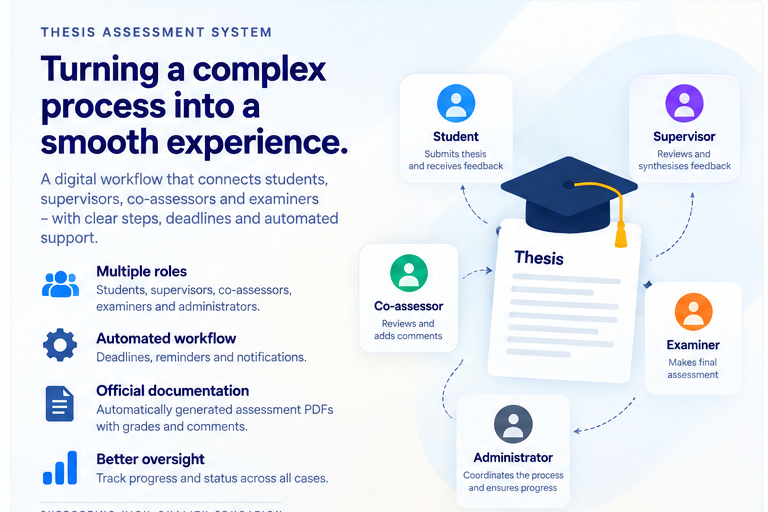
The academic assessment process already existed. An administrator had to coordinate information between students, supervisors, co-assessors and examiners: distribute feedback, follow deadlines, collect returned information, prepare documents and move each case forward.
Process discovery
Understanding the process before automating it.
I designed and built the system myself. I learned the existing assessment process through discussions and interviews with administrators and other participants, then modelled it as a digital workflow. The academic process came from the people doing the work; my contribution was translating it into an executable system.
01 / From discovery to implementation
Turning a human process into an executable workflow.
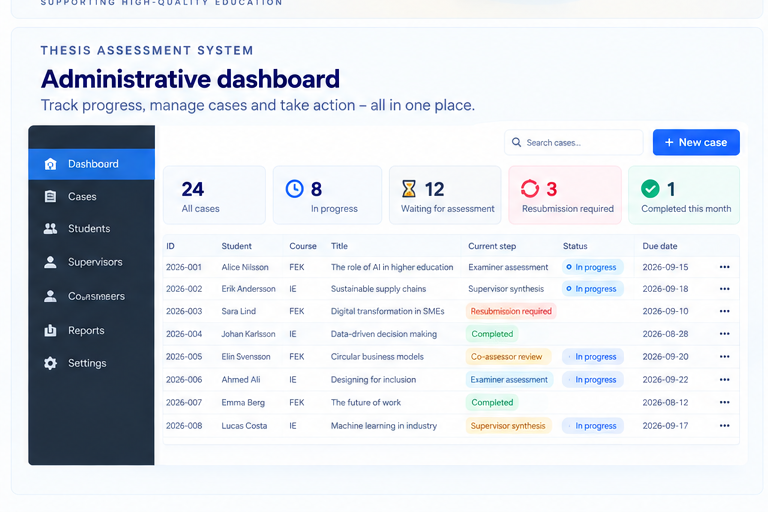
The workflow coordinates assignments, deadlines, reminders and notifications across several roles. It collects and routes feedback, distributes information to the relevant participants, and supports conditional paths, resubmission and final completion.
WordPress provides the application platform. Gravity Forms collects the information used in each case; Gravity Flow coordinates assignments, conditions and movement between steps. PDF and document generation prepare the outputs needed by the process.
02 / People and responsibilities
Different people, different responsibilities.
A case passes between people with different responsibilities. The workflow needs to put the relevant information and assignment in front of each person at the appropriate stage.
- Students Submit the thesis, receive feedback and revise when resubmission is required.
- Co-assessors Review the thesis and provide assessment feedback.
- Supervisors Review co-assessor feedback, add their own assessment and bring the feedback together.
- Examiners Carry out the final academic assessment.
- Administrators Create cases and coordinate progress through the process.
03 / Coordination and judgement
Automation around human judgement.
Assignments, reminders, feedback routing and document preparation are predictable coordination tasks. The workflow supports those tasks around the academic work.
Academic judgement remains with supervisors, co-assessors and examiners. They assess the thesis and provide the decisions that determine how the case moves forward.
04 / Conditions and resubmission
Not every case follows the happy path.
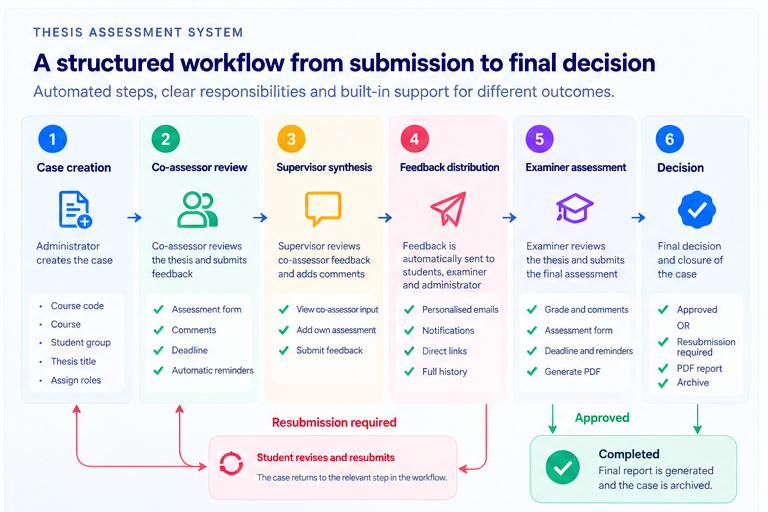
The workflow can branch according to assessment outcomes. An approved case can proceed toward completion and final documentation. A case requiring resubmission can return to an appropriate earlier stage so the process can continue.
The conceptual sequence
- Case creation
- Co-assessor review
- Supervisor synthesis
- Feedback distribution
- Examiner assessment
- Decision
This is a simplified view of the workflow. The first real cases revealed exceptions beyond the paths identified during initial process mapping.
05 / Documents and outputs
From workflow data to official assessment documents.
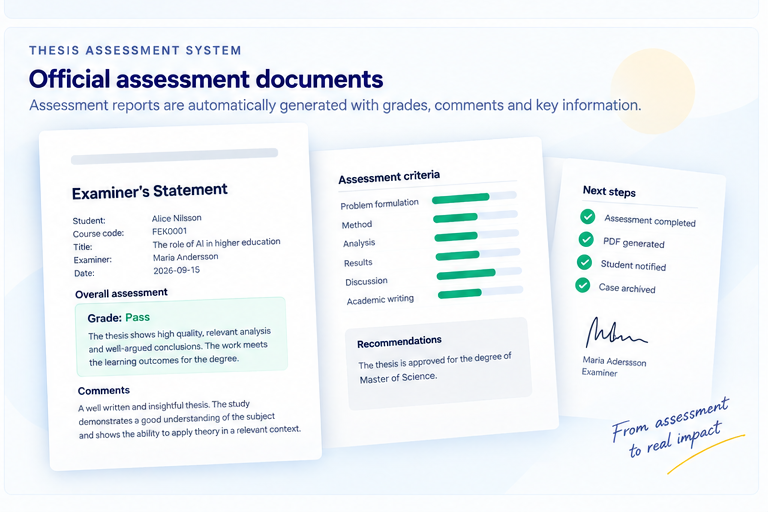
The system generates PDF assessment documents from the information collected through the workflow, including assessments and comments supplied by the people involved.
Document generation prepares and distributes that information as part of the process. The academic content and judgement come from the assessors.
06 / Initial use and the next iteration
Real use changed the design.
≈15 initial thesis cases.
The first iteration was used for approximately 15 thesis cases. Those real cases exposed exceptions that had not surfaced during the initial process mapping. Some of these special cases caused problems in the first version.
The next iteration
I am refining the system to handle those cases better. The lesson is to design for the cases that depart from the standard workflow as well as those that follow it. The first live cases became part of the discovery process for the next iteration.